Sarissa Montague tells WZZM 13 bringing facts forward is important step in viral seat belt arrest case involving Grand Rapids Police Department
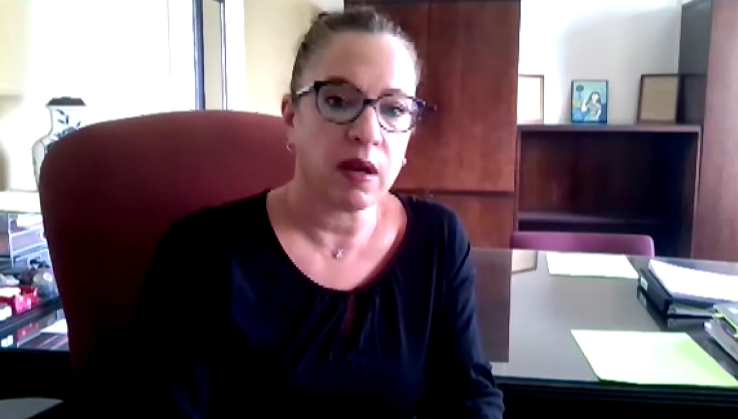
In an interview with WZZM 13, Markou Montague Levine Defense Partner Sarissa Montague explained a constitutional question strikes at the foundation of the prosecution for a viral case involving the Grand Rapids Police Department.
Emran Sharifi faces a felony charge of assaulting, resisting or obstructing a police officer causing serious impairment after his June 19arrest during a Grand Rapids traffic stop. Viral cell phone video shows several officers pulling Sharifi from the passenger seat of a car. As they fell to the ground, Sharifi’s body landed on an officer’s leg, seriously injuring him. But Sharifi’s attorneys argue none of it should have happened because officers lacked a lawful basis to arrest him.
“The prosecution has to show that Mr. Sharifi knowingly resisted lawful, and I put that in bold, lawful police conduct,” defense attorney Norman Miller said during the Aug. 20 continuation of Sharifi’s preliminary examination.
Police stopped the car after its driver allegedly failed to use a turn signal. Officers then accused Sharifi of riding without a seat belt and demanded his name so they could issue a citation. Sharifi said he removed his seat belt after the car stopped and repeatedly questioned why he had to identify himself when he was not driving. His attorneys maintain neither officer witnessed Sharifi without a seat belt while the vehicle was moving. Without evidence of a violation, they argue, police had no legal basis to compel Sharifi to identify himself, and therefore no lawful basis to arrest him when he refused.
Attorneys further alleged the vehicle was targeted because officers had joked about a three-day competition over who could make the most arrests. Body-camera recordings played in court appeared to capture officers discussing arrest numbers, a “quota” and what one officer characterized as a joke rather than a real bet. They also pointed to language within Michigan’s seat-belt law declaring that enforcement should be conducted “in a manner calculated to save lives” and not in a way that results in “inappropriate enforcement” against Michigan residents.
“Cases are only allowed to go forward based on constitutional evidence,” Montague told WZZM 13 in her interview. “If there isa constitutional barrier to this prosecution, meaning that law enforcement acted in an unconstitutional way, such that the charges never should have been brought in the first place, then the preliminary examination is a very important stage.”
Montague, who is not involved in Sharifi’s case, said the hearing acts as a safeguard, allowing a judge to stop a legally deficient case before it proceeds through months of litigation in circuit court.
Montague said requesting written arguments is appropriate when the facts raise a complicated or unsettled legal issue, and should not be interpreted as an indication of how the judge will ultimately rule.
“Bringing the facts forward, bringing the legal arguments forward, putting it through the system, giving it to a judge to decide is an important step in protecting everybody’s rights in this country,” said Montague.
Judge Kellen Dotson of 61st District Court in Grand Rapids gave prosecutors until Sept. 3 to explain in writing why the officers’ actions were constitutional. Sharifi’s attorneys will then have until Sept. 17 to submit their response. Dotson is expected to rule afterward on whether the case should proceed.
Watch Sarissa’s full interview, here.