
Juvenile Charges We Handle
From first-time misdemeanors to serious felony allegations, we represent young people and their families at every stage of the juvenile process.
How the Michigan Juvenile Justice System Works
The juvenile system operates very differently from adult criminal court, and understanding those differences shapes every decision we make in a case.
Juvenile Court vs. Adult Court
The juvenile system in Michigan handles cases involving people under 18 at the time of the alleged offense. The focus is on rehabilitation rather than punishment. Proceedings are generally confidential, and dispositions can often be expunged once the young person reaches adulthood and meets the eligibility requirements.
Adult court is a different environment entirely. Proceedings are public, sentences are punitive, and convictions create a permanent adult record. Prosecutors can petition to have serious cases tried in adult court, and for the most serious offenses, automatic transfer provisions apply. Preventing that transfer or defending vigorously in adult court when transfer cannot be avoided is one of the most important things we do in serious juvenile cases.
The Intake and Petition Process
After an arrest, typically a juvenile officer or probation officer conducts an intake assessment. At this stage, the officer can recommend an informal adjustment (a resolution without formal court involvement), diversion, or a formal petition, meaning the case proceeds to court.
Early attorney involvement at the intake stage often makes a significant difference because the recommendations made here shape everything that follows.
Disposition Options
If a case proceeds to adjudication, where a judge reviews evidence and decides the outcome, the court has broad discretion in disposition orders. Options include:
- Probation with conditions such as counseling, community service, or curfew
- Placement in a treatment or residential program
- Juvenile detention
- Delayed or deferred adjudication with conditions
- Consent calendar (informal supervision without a formal adjudication)
We advocate for the least restrictive disposition that addresses the court's concerns while giving our client the best opportunity to move forward.
Record Sealing and Expungement
Michigan law allows for expungement of most juvenile adjudications (depending on the offense), provided certain conditions are met. Some serious offenses are excluded. We advise clients and their families about expungement eligibility from the beginning because the resolution of a case affects whether expungement will be available later.
What Families Should Know About Juvenile Cases
The juvenile system is designed to help young people, but it doesn't protect them automatically. These are the things families often wish they had known sooner.
Your Child Has Constitutional Rights
Juveniles have the same Fourth and Fifth Amendment rights as adults. Police must have reasonable suspicion to stop a juvenile, probable cause to search them, and must advise them of their Miranda rights before custodial questioning.
School officials operate under somewhat different rules, but searches of backpacks, lockers, and personal items still have limits. Evidence obtained in violation of these rights can be suppressed.
The System Does Not Always Protect Your Child Automatically
The juvenile system is designed to be rehabilitative, but that doesn't mean it always produces the right outcome without advocacy. Probation officers, prosecutors, and even judges are working with incomplete information. An attorney ensures the context, the circumstances, and the young person's character and support system are part of every conversation and every decision.
Statements Your Child Makes to Police Can Be Used Against Them
Juveniles often talk to police without fully understanding the consequences. A young person who tries to explain themselves, minimize their role, or deflect blame can inadvertently make their situation worse. If your child has already made statements to police, we analyze those statements carefully and look for any Miranda or custodial interrogation issues that could support suppression.
Acting Quickly Is Crucial
The intake and petition stage moves fast. Decisions about whether to pursue diversion, what charges to file, and what conditions to impose are made early in the process. The earlier we're involved, the more easily we can shape what happens at that stage.
Defense Strategies in Juvenile Cases
The right strategy for your child’s case depends on the charge, the evidence, and what stage of the process the case is in, but these are the tools we use most often.
For first-time and lower-level offenses, we pursue diversion aggressively. Successful completion of a diversion program typically results in the charge being dismissed without a formal adjudication. These programs exist precisely for situations like this, and accessing them is often the best outcome available.
Illegal searches are common in juvenile cases. When evidence was obtained without proper legal authority, we file suppression motions that can remove the foundation of the prosecution's case.
Witness accounts in juvenile cases are frequently unreliable, particularly in fight cases, where multiple versions of events circulate quickly through friend groups and social media. We examine every witness statement, every piece of digital evidence, and every inconsistency the prosecution is relying on.
When prosecutors seek to try a juvenile as an adult, we respond with a detailed record showing the young person's amenability to treatment, their background and circumstances, and the reasons the juvenile system can appropriately address the offense. Transfer hearings are contested proceedings, and the outcome is not predetermined.
Even when the facts of the case are not in dispute, the outcome depends heavily on how the young person and their family are presented to the court. Educational records, family background, mental health history, and evidence of community support can give the court the information it needs to make a disposition that serves our client's interests.

Meet Our Juvenile Defense Team
The efforts of our three attorneys are backed up by a full support team. When you choose Markou | Montague | Levine Defense, you’ll have access to a group of talented legal professionals who all know your case and are working toward the same outcome.

Anastase Markou
30+ Years of Criminal Defense
Sarissa K. Montague
18+ Years of Criminal Defense
Randall S. Levine
45+ Years of Criminal Defense




Our journey began in 1987, and since then, we have evolved to protect our clients' future, securing the best possible outcomes. We prioritize: custom strategies for every case, clear communication, and personalized attention.
Areas We Serve
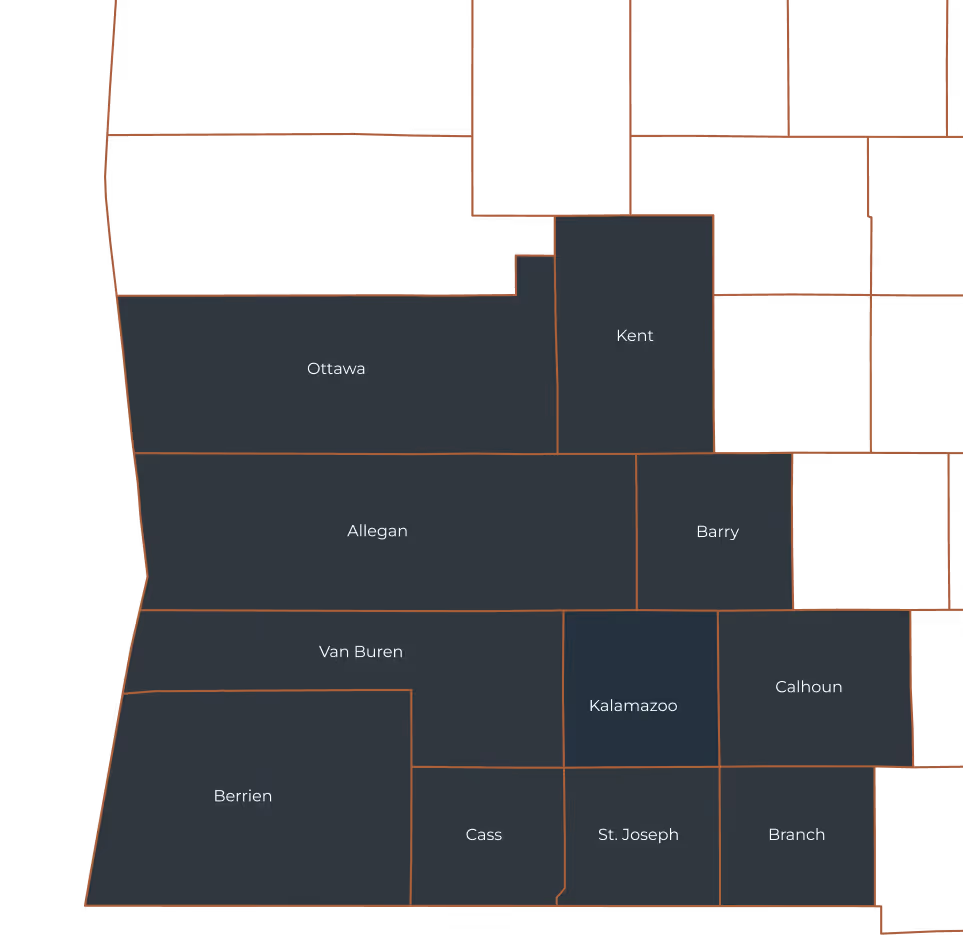
Based in Kalamazoo, our criminal defense team serves clients throughout Southwest Michigan:
Primary Counties:
- Kalamazoo County
- Van Buren County
- Allegan County
- Barry County
- Calhoun County
- St. Joseph County
- Branch County
- Cass County
- Berrien County
- and surrounding communities
Michigan Statewide Services:
- Driver's License Restoration (throughout Michigan)
- Professional Licensing Defense (throughout Michigan)

Act Now, Before Decisions Are Made Without You
The intake and petition stage in a juvenile case moves fast. The earlier we get involved, the more we can do to shape the outcome. Don't wait for the system to decide what happens to your child.
Call now for a free, confidential consultation with a Kalamazoo juvenile defense attorney.
Frequently Asked Questions About Juvenile Charges
Stay calm, and tell your child not to answer any questions until an attorney is present. Contact a defense attorney as soon as possible. Ideally, you should do this before your child speaks with a probation officer or intake worker. The intake stage shapes everything that follows.
A juvenile adjudication is not the same as an adult criminal conviction, and most juvenile records can be expunged once your child meets the eligibility requirements. How the case is resolved affects whether expungement will be available later or not.
Yes, in certain circumstances. Prosecutors can petition for adult court in serious felony cases, and some offenses carry automatic transfer provisions. We fight transfer petitions vigorously and present a full record of the young person's background and amenability to rehabilitation.
The consent calendar allows a juvenile case to be handled through informal supervision without a formal disposition being entered. It's typically available for first-time, lower-level offenses. Successful completion means no adjudication happens at all.
Most colleges ask about criminal history, and some ask specifically about juvenile records. A sealed or expunged record generally does not need to be disclosed, but an unsealed adjudication may. We prioritize dispositions that protect the young person’s record precisely because of these long-term consequences.