
Driver’s License Defense Cases We Handle
When a client’s license is suspended or revoked, we work hard to restore their driving privileges. Here are some of the types of cases we take on.
Michigan License Revocation and Restoration: How It Works
There is a difference between suspension and revocation of a license, and the reinstatement process for each is also different.
Suspension vs. Revocation
A suspension is temporary. It means that your license will be taken for a defined period. You must wait out that period and meet other conditions, such as paying fees or completing a program. If you can show that you’ve met the required conditions, your application for reinstatement will likely be granted.
A revocation has no automatic end date. Your license is canceled, and you must petition the Secretary of State to get it back. There is no guarantee of reinstatement, and many people are denied at their first hearing.
Restoring a revoked license can be difficult, but proper preparation makes all the difference.
The OHAO Hearing Process
License restoration hearings in Michigan are conducted by the Office of Hearings and Administrative Oversight (OHAO) of the Department of State. To win your hearing, you must prove by clear and convincing evidence that:
- Your alcohol or drug problem is under control.
- Your alcohol or drug problem is likely to remain under control.
- You do not present a risk to public safety.
That is a high standard. Hearing officers review substance use evaluations, community support letters, AA or treatment records, and your personal testimony. They are trained to identify inconsistencies. An unprepared applicant who gives answers that contradict their documentation will likely be denied.
What the Hearing Officer Is Looking For
Hearing officers focus on sobriety, stability, and insight. They want to see that you have made genuine changes in your life and that you’ve implemented support systems to sustain those changes.
Common reasons for denial include a substance use evaluation that minimizes the severity of past use, support letters that don't address the right issues, gaps in sobriety documentation, and answers during the hearing that raise doubts. Specifically, the hearing officer will be looking for inconsistencies between your evaluation, your support letters, and what you say at the hearing.
Restricted License vs. Full Restoration
If your petition for license restoration is approved, it will probably be granted on a restricted basis. On a restricted license, you can drive for certain approved purposes, such as:
- Commuting to work
- Commuting to school
- Going to medical appointments
- Attending court-ordered support group meetings
The restrictions also typically require that an interlock device be installed in your vehicle. Full restoration requires a separate petition. You can typically apply for full restoration after at least one year on a restricted license with a clean interlock record.
What Goes Into a Strong Restoration Case
Preparation is the single biggest factor in whether a restoration petition succeeds or fails.
Substance Use Evaluation
The evaluation is the foundation of your restoration case. It must be completed by a substance abuse professional and submitted to the Secretary of State before your hearing. A poorly completed evaluation is the most common reason license restoration cases fail. These weak evaluations may:
- Underestimate past use
- Contain inconsistencies
- Fail to address sobriety adequately
We work with clients to make sure they understand what the evaluator is looking for and how to present their history accurately.
Community Support Letters
Support letters must come from people who know you well and can speak specifically to your sobriety and lifestyle changes. Generic letters that describe you as a good person without addressing your alcohol or drug history directly are not helpful.
We guide clients on who to ask and what the letters should address so they reinforce rather than undercut the evaluation.
Sobriety Documentation
AA attendance records, treatment completion certificates, drug and alcohol testing history, and similar documentation all support your claim.
The length of documented sobriety matters. Hearing officers generally want to see meaningful sobriety time before restoring an applicant’s license. We help clients identify and organize evidence that strengthens this part of their case.
Hearing Preparation
Walking into an OHAO hearing without preparation is one of the most common mistakes we see. Even if you’ve put in the work to stay sober, inconsistent or vague answers to a hearing officer’s questions can create doubts that lead to denial.
We prepare clients for the questions they will face, review their documentation for anything that could be challenged, and make sure their testimony tells a consistent, credible story.
Collateral Consequences of a Revoked or Suspended License
The impact of losing a license extends well beyond the inability to drive.
Employment
Many jobs require a valid driver's license as a condition of employment. A license revocation can mean losing a well-paying job or getting rejected by potential employers.
Commercial driver's license (CDL) holders face even stricter consequences, as someone whose standard driver’s license is revoked will also lose their CDL.
Insurance
Drivers with revocations or suspensions on their records face dramatically higher insurance premiums, even after they get their licenses back. Some insurers decline coverage entirely until a certain period has passed.
Family Responsibilities and Daily Life
Most people in Southwest Michigan rely on private vehicles to get around. Medical appointments, school drop-offs, grocery shopping, and other daily tasks become significantly harder without a license. For families with children or elderly dependents, the effects ripple outward quickly.
Immigration
For a noncitizen, a suspended or revoked license can create additional legal complications that threaten their immigration status. Addressing the underlying revocation can be the most direct way to reduce that exposure.

Meet Our License Restoration Team
The efforts of our three attorneys are backed up by a full support team. When you choose Markou | Montague | Levine Defense, you’ll have access to a group of talented legal professionals who all know your case and are working toward the same outcome.

Anastase Markou
30+ Years of Criminal Defense
Sarissa K. Montague
18+ Years of Criminal Defense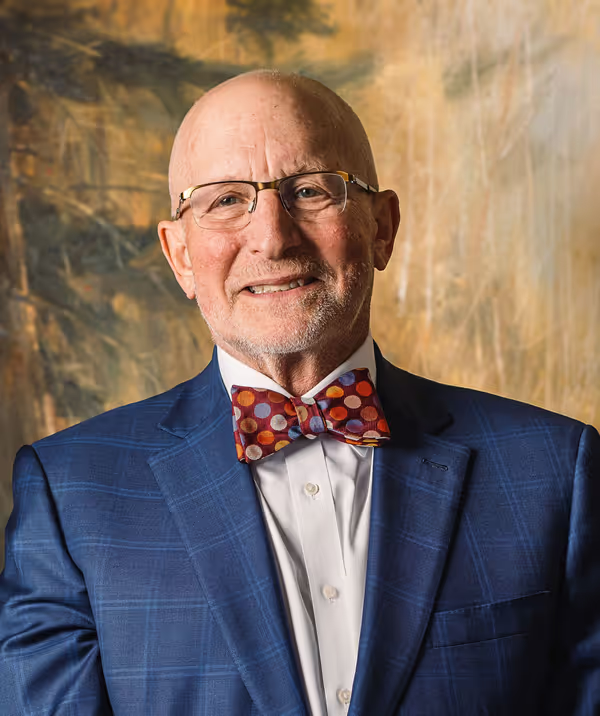
Randall S. Levine
45+ Years of Criminal Defense


Our journey began in 1987, and since then, we have evolved to protect our clients' future, securing the best possible outcomes. We prioritize: custom strategies for every case, clear communication, and personalized attention.
Areas We Serve
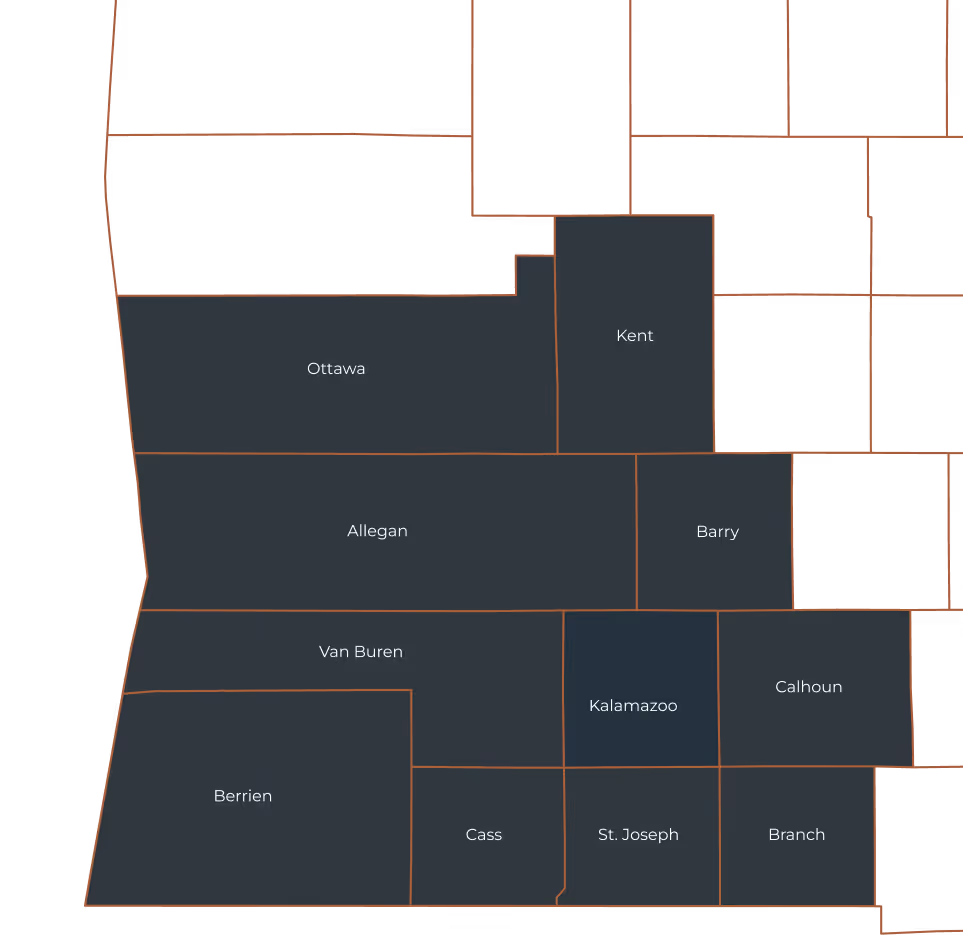
Based in Kalamazoo, our criminal defense team serves clients throughout Southwest Michigan:
Primary Counties:
- Kalamazoo County
- Van Buren County
- Allegan County
- Barry County
- Calhoun County
- St. Joseph County
- Branch County
- Cass County
- Berrien County
- and surrounding communities
Michigan Statewide Services:
- Driver's License Restoration (throughout Michigan)
- Professional Licensing Defense (throughout Michigan)

Get Back Behind the Wheel
A revoked or suspended license doesn't have to be permanent. With the right preparation and the right representation, you could get back on the road to your future.
Call now for a free consultation with a Kalamazoo license restoration attorney who knows this process inside and out.
Frequently Asked Questions About License Restoration
You can check your driving record through the Michigan Secretary of State website or by visiting your local Secretary of State office. Your record will show the current status, the reason for any action, and any conditions attached to reinstatement.
Typically, you must wait one year before filing another petition, or you can appeal the denial to the circuit court within 63 days. Depending on the circumstances, a circuit court appeal might have a good chance of success. In other cases, it makes more sense to address any weaknesses in the petition and file again in a year.
Yes. Hearing officers want to see a meaningful period of demonstrated, documented sobriety. Applying before that foundation is solid will typically result in denial.
Yes. A prior denial doesn't prevent you from petitioning again after a one-year waiting period. The key is understanding why you were denied and specifically addressing those issues before your next hearing. We review any prior denial letters and build the next petition around fixing whatever fell short.
If your license was suspended rather than revoked, you may be eligible to apply for a hardship or restricted license. If your license has been revoked, the only way to regain your driving privileges is through a OHAO hearing.