
Kalamazoo Professional Licensing & LARA Defense Lawyer
Professionals and Licenses We Defend
Licensing board proceedings vary by profession and by the nature of the complaint, but the stakes are consistently high regardless of the type of license involved. Here are some of the professionals whose credentials we defend.
How Licensing Investigations Work
Professional licensing proceedings operate under administrative law, which has rules, standards, and procedures different from those of criminal court. Understanding how these actions work is essential to managing them effectively.
Most licensing proceedings begin with a complaint from a patient, client, employer, colleague, or law enforcement agency. LARA or the relevant board then assigns an investigator, who may request documents, interview witnesses, and gather records before issuing formal charges.
How a licensee responds to an investigator's initial request can significantly affect the outcome of this critical stage. This includes what they say, what documentation they provide, and what they decline to produce.
We advise clients on how to respond to investigators’ initial requests, before any formal charges are filed. Providing too much, too little, or the wrong framing of factual information at this stage can create problems that are difficult to fix later.
If the investigation produces enough evidence, the department issues a formal complaint, and the licensee must respond within a specific timeframe.
The answer to a formal complaint is an important document. It sets out the licensee's position, addresses each allegation, and lays the factual groundwork for everything that follows. Our skilled legal team focuses on drafting these responses carefully and strategically.
Administrative hearings before a licensing board or administrative law judge function similarly to bench trials. Evidence is presented, witnesses are examined, and the decision-maker issues findings of fact and conclusions of law. The standard of proof in most licensing proceedings is a preponderance of the evidence, which is lower than the criminal standard.
We prepare for these hearings with the same rigor we bring to trial, preparing witnesses, reviewing documents, securing expert testimony where appropriate, and cross-examining the board's witnesses.
Licensing board decisions can be appealed to the circuit court and, if necessary, to the Michigan Court of Appeals. If a hearing produces an adverse outcome, we can evaluate the record for legal errors and pursue appellate remedies when they’re available.
When Criminal Charges and Licensing Risks Intersect
One of the most important and frequently misunderstood aspects of professional licensing defense is the relationship between criminal proceedings and licensing board proceedings. These matters are separate but not independent.
A criminal conviction can trigger mandatory reporting obligations to a licensing board and a board investigation that proceeds on its own timeline, regardless of the criminal case. Conversely, statements made in a licensing hearing can create problems in the related criminal case if the dual strategies aren’t coordinated carefully.
We regularly represent clients facing this difficult situation: healthcare professionals charged with drug-related offenses, teachers facing criminal charges arising from conduct at school, financial professionals being investigated on fraud charges.
In every case, the two proceedings must be managed together, with a clear understanding of how what happens in one affects the other.
Defense Strategies for Licensing Proceedings
The following are some of the defense strategies our capable professional licensing defense lawyers in Kalamazoo use to protect clients and their right to work in their chosen field.
Responding to the Initial Complaint Tactfully
The response to the investigators’ first inquiry sets the tone for everything that follows. We advise clients on what to provide, how to present factual information, and what not to say at this stage, before the investigation turns into a formal charge.
Contesting the Factual Basis of the Complaint
Many licensing complaints rest on a one-sided account of events, whether it’s a patient's limited viewpoint, a client's interpretation, or an employer's narrative that doesn't reflect what actually happened. We investigate independently, collect documentation and witness accounts that support our client's version of events, and present an authoritative factual record to the board.
Challenging the Board’s Legal Conclusions
Licensing boards sometimes misapply their own standards or exceed their statutory authority. They may also reach conclusions that aren't supported by the evidence. As part of our review of the board's legal authority, we look at the applicable professional standards and the procedural requirements at every stage and challenge departures from what the law actually requires.
Presenting Evidence of Rehabilitation and Seeking Mitigation
Even when a violation has occurred, the severity of the sanction isn’t predetermined. Boards have discretion in how they respond.
Our license defense lawyers push for the mitigation of consequences based on the licensee's prior record, the contributions they’ve made to their field, the circumstances that led to the conduct, and what’s changed since. When the board sees the full picture, it will be better positioned to impose an appropriate response.
Pursuing a Negotiated Consent Order
In some cases, a negotiated consent order (an agreed-upon resolution with the board) produces a better outcome than a contested hearing. Our team negotiates these agreements carefully, with attention to the terms of any probation or other conditions imposed, and how the agreement will affect the client’s future licensing and employment.

Meet Our Licensing Defense Team
The efforts of our three attorneys are backed up by a full support team. When you choose Markou | Montague | Levine Defense, you’ll have access to a group of talented legal professionals who all know your case and are working toward the same outcome.
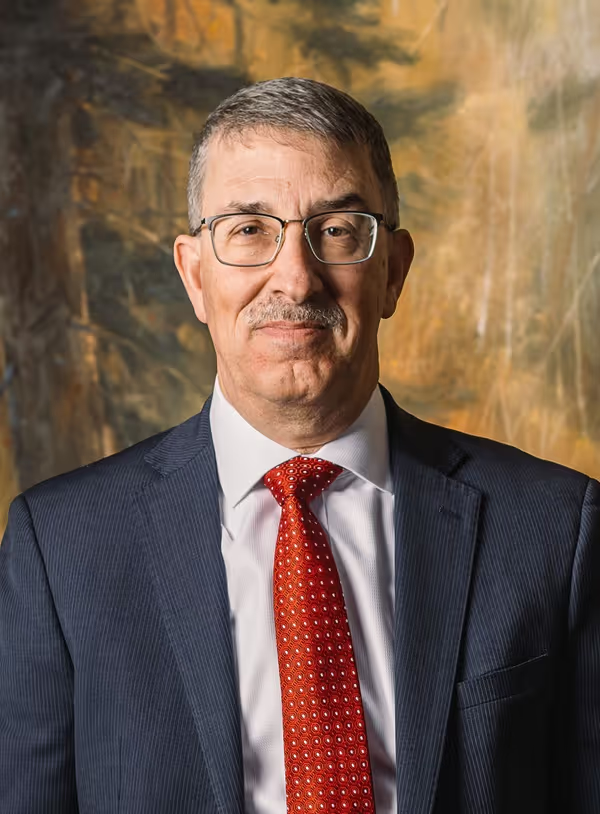
Anastase Markou
30+ Years of Criminal Defense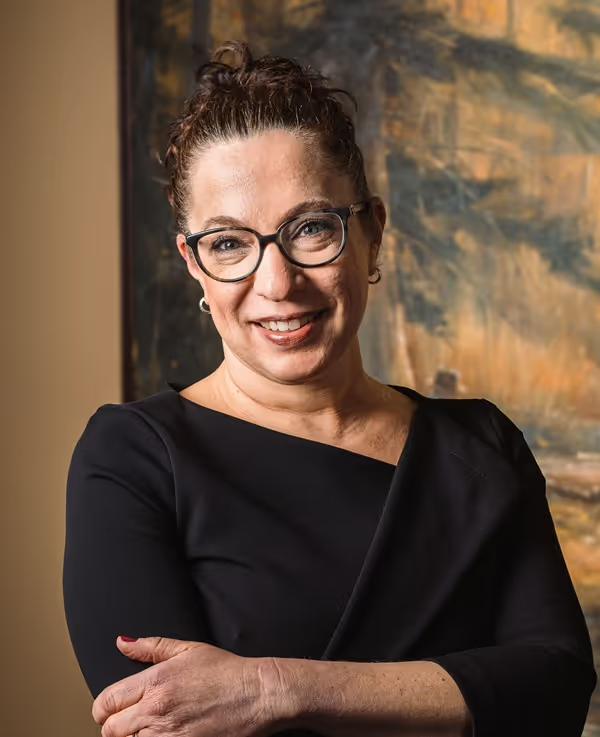
Sarissa K. Montague
18+ Years of Criminal Defense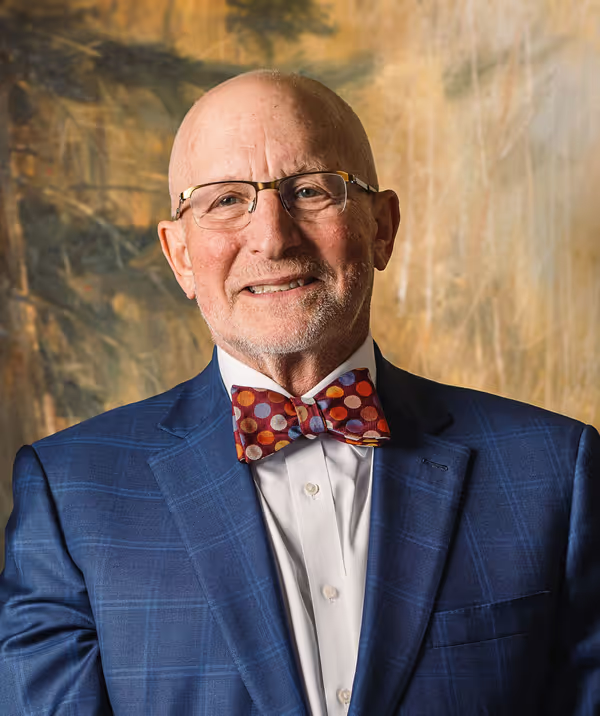
Randall S. Levine
45+ Years of Criminal Defense

Our journey began in 1987, and since then, we have evolved to protect our clients' future, securing the best possible outcomes. We prioritize: custom strategies for every case, clear communication, and personalized attention.
Areas We Serve
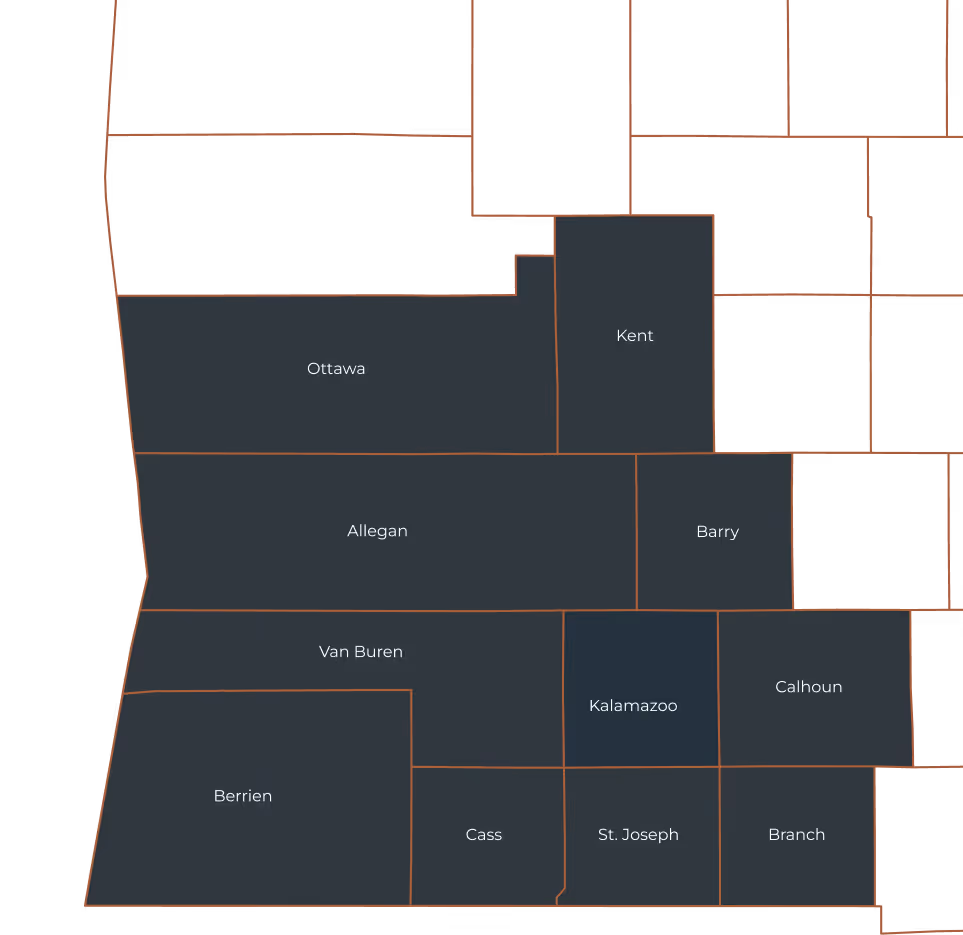
Based in Kalamazoo, our criminal defense team serves clients throughout Southwest Michigan:
Primary Counties:
- Kalamazoo County
- Van Buren County
- Allegan County
- Barry County
- Calhoun County
- St. Joseph County
- Branch County
- Cass County
- Berrien County
- and surrounding communities
Michigan Statewide Services:
- Driver's License Restoration (throughout Michigan)
- Professional Licensing Defense (throughout Michigan)
Act Before the Investigation Moves Forward
Licensing boards move on their own timeline, and the early stages of an investigation are often where the most important decisions — and the most mistakes — get made. A response that seems straightforward can cause problems, while a strong, well-framed answer can sometimes stop a complaint from becoming a formal charge.
Call now for a free, confidential consultation with a Kalamazoo professional licensing defense attorney.
Frequently Asked Questions About Licensing Defense
You aren’t required to have one, but going without legal counsel is a significant risk. The way you respond to the initial complaint can affect the entire proceeding. Board investigators are experienced at gathering information, and an underprepared response can create problems that are hard to undo.
Yes. Many licensing boards have independent authority to investigate and discipline licensees based on an arrest, a pending charge, or conduct that forms the basis of a criminal case, even if the criminal case is ultimately dismissed. We address both proceedings simultaneously and coordinate a dual strategy to minimize the risk in each.
A suspension is temporary, meaning the license is inactive for a defined period, with conditions for reinstatement. A revocation cancels the license entirely. Reinstatement after revocation typically requires a separate petition and, in some cases, retesting or additional education.
Timelines vary considerably by board and by the complexity of the complaint. Some investigations resolve within a few months; others may take a year or more. The process can also be expedited or extended depending on the nature of the allegations and how the parties respond. We’ll keep you informed throughout and move the process forward however we can.
Yes. Adverse decisions from most Michigan licensing boards can be appealed to the circuit court and, if necessary, to the Michigan Court of Appeals. Our lawyers evaluate the record for legal errors after any adverse hearing outcome and pursue appellate remedies when available.