
Charges We Handle
These cases span a wide range of allegations, each with distinct legal elements and defense considerations.
Why These Cases Require a Different Kind of Defense
Crimes against children cases are unlike most other criminal matters in several important ways that shape how they need to be defended.
The Investigation Often Begins Before an Arrest
In most cases, law enforcement begins gathering evidence by interviewing the complainant, conducting forensic interviews, preserving digital evidence, and executing search warrants well before an arrest is made.
By the time charges are filed, the government's case is already assembled. Getting an attorney involved as early as possible allows us to identify weaknesses in that investigation before the case hardens.
Forensic Interviews Can Be Conducted Improperly
In cases involving child complainants, the forensic interview is often the centerpiece of the prosecution's case. These interviews are supposed to follow strict protocols designed to avoid leading questions and suggestions.
When interviewers ask leading questions, repeat questions until the child gives a different answer, or conduct interviews in a way that suggests a particular outcome, the reliability of the child's account is compromised. We scrutinize every forensic interview and can retain our own experts to evaluate them.
Digital Evidence Requires Independent Analysis
The majority of CSAM and online solicitation cases are built on digital evidence, such as device contents, account records, IP address logs, and metadata. Law enforcement forensic analysis is not infallible. Devices can be misattributed, accounts can be accessed by multiple people, and attribution based on IP addresses alone may be unreliable.
We retain independent forensic experts who examine the same evidence the government is relying on and identify problems the prosecution's analysis may have missed or ignored.
False Accusations Occur
In custody disputes, family conflicts, and other adversarial circumstances, children can be coached, pressured, or influenced to make statements that don't reflect reality. Adult accusers also sometimes make false reports.
We investigate the circumstances surrounding the accusation and build a defense that addresses the source of the allegation directly.
The Consequences Extend Far Beyond Sentencing
A conviction for a crime against a child typically results in placement on the sex offender registry. Registration requirements affect where a person can live, work, and travel. They are public, permanent, and followed by residency and proximity restrictions that can make normal life almost impossible. We fight these charges with that full picture in mind, not just the immediate sentencing exposure.
Defense Strategies
Every case turns on different facts, but these are the areas where the government's evidence is most often challenged.
When the forensic interview that produced the child's account was conducted improperly with leading questions, repeated questioning, or suggestive techniques, we challenge its reliability through cross-examination and independent expert testimony. An improperly conducted forensic interview can undermine the foundation of the entire prosecution.
Search warrants for homes, devices, and online accounts must meet constitutional standards. In digital cases, especially, warrants are often sweeping, poorly particularized, or executed in ways that exceed their scope. Successful suppression of illegally obtained digital evidence can remove the core of the government's case.
We retain forensic experts who independently examine the devices, accounts, and digital records the government relies on. Attribution errors, shared device issues, malware explanations, and metadata inconsistencies are common findings that the prosecution's own analysis may not have considered.
The science of child suggestibility and forensic interviewing is well-developed. When an interview was conducted improperly, or a disclosure arose under suspicious circumstances, we present expert testimony about how those factors affect reliability. This gives the jury or judge the context they need to evaluate the evidence critically.
In undercover online sting operations, entrapment is a legitimate defense when law enforcement induced someone to commit an offense they were not predisposed to commit. We examine every communication in these cases, the investigator's conduct, and the timeline of the operation to assess whether the government crossed the line.
Several crimes against children charges require proof of specific intent or knowledge. In CSAM cases, the government must prove the defendant knew the material depicted a minor. In solicitation cases, intent is central. We challenge these elements directly where the evidence supports doing so.

Meet Our Defense Team
The efforts of our three attorneys are backed up by a full support team. When you choose Markou | Montague | Levine Defense, you’ll have access to a group of talented legal professionals who all know your case and are working toward the same outcome.

Anastase Markou
30+ Years of Criminal Defense
Sarissa K. Montague
18+ Years of Criminal Defense
Randall S. Levine
45+ Years of Criminal Defense




Our journey began in 1987, and since then, we have evolved to protect our clients' future, securing the best possible outcomes. We prioritize: custom strategies for every case, clear communication, and personalized attention.
Areas We Serve
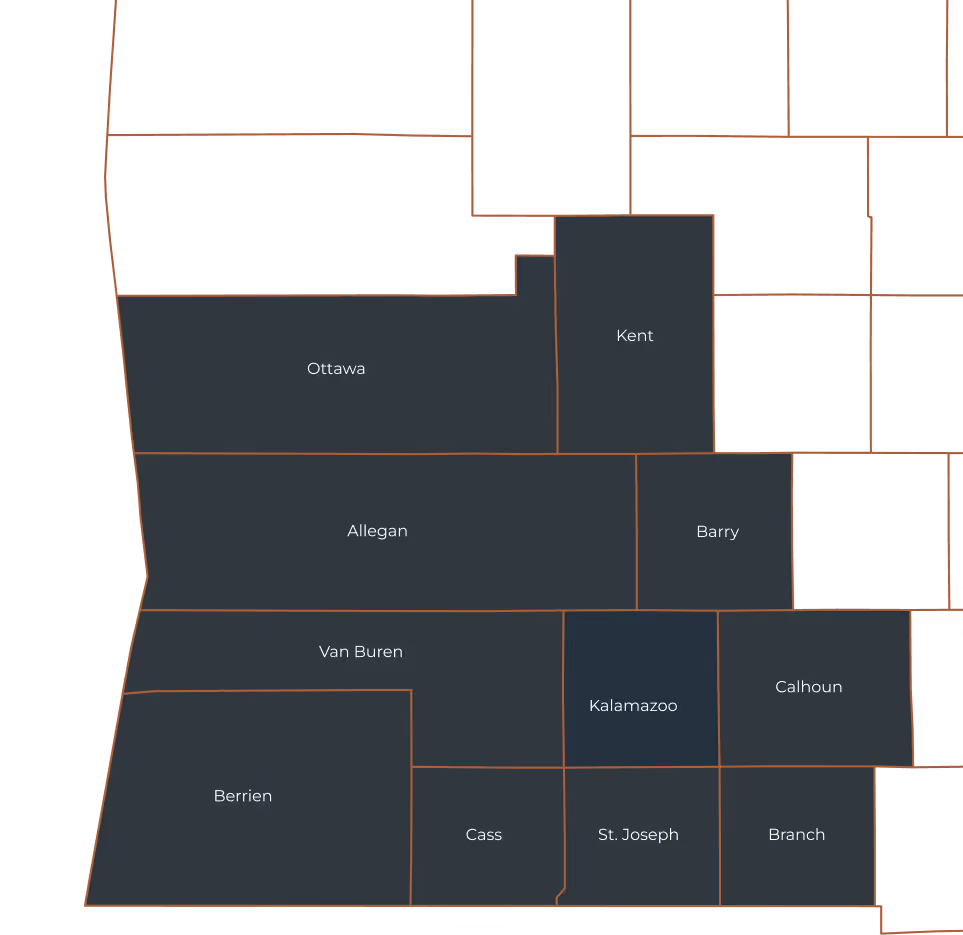
Based in Kalamazoo, our criminal defense team serves clients throughout Southwest Michigan:
Primary Counties:
- Kalamazoo County
- Van Buren County
- Allegan County
- Barry County
- Calhoun County
- St. Joseph County
- Branch County
- Cass County
- Berrien County
- and surrounding communities
Michigan Statewide Services:
- Driver's License Restoration (throughout Michigan)
- Professional Licensing Defense (throughout Michigan)

Your Defense Starts Now
Crimes against children cases move fast, and the stakes are severe. Every day matters when it comes to preserving evidence, identifying weaknesses in the investigation, and building a response that gives you the best possible chance.
Call now for a free, confidential consultation with a Kalamazoo defense attorney who will treat your case with the seriousness it deserves.
Frequently Asked Questions
Yes. Michigan law does not require corroboration of a child complainant's testimony. That makes the quality of the investigation, the circumstances of the disclosure, and the forensic interview process all the more important to challenge. We examine every factor that bears on the reliability of the account.
Michigan's Sex Offenders Registration Act requires convicted sex offenders to register with law enforcement and comply with residency, employment, and reporting requirements. Depending on the offense, registration can last 15 years, 25 years, or for life. SORA requirements are public, restrictive, and carry criminal penalties for noncompliance.
A recantation does not automatically result in charges being dropped. Prosecutors can and do proceed based on prior statements, physical evidence, or other corroboration, even when a complainant later changes their account. We use recantations strategically as part of the overall defense, while preparing for the possibility that the prosecution continues.
Yes. Cases are dismissed for insufficient evidence, constitutional violations, and problems with the investigation. Some cases resolve through plea agreements to reduced charges that avoid registration requirements or mandatory minimums. Every case is different, and we evaluate every available option honestly.
Call an attorney immediately. Pre-charge involvement gives us the opportunity to engage with investigators, limit the scope of what they gather, and, in some cases, influence whether and how charges are filed. Do not speak to law enforcement, submit to interviews, or consent to device searches without counsel present.