
Federal Cases We Handle
Our criminal defense practice covers the full range of federal offenses prosecuted in the Western District of Michigan and beyond.
How Federal Cases Work
Federal trials operate on a different timeline, under different rules, and with different consequences than those that take place in state courts. For this reason, it’s critical to understand how the process unfolds from the very beginning.
Investigation Prior to Arrest
Most federal cases don't begin with an arrest. They begin with a grand jury subpoena, a visit from federal agents, a target letter from the U.S. Attorney's Office, or a parallel investigation by a regulatory agency.
By the time any of those things happen, the government has typically been building its case for months. The earlier you get reliable legal representation, the more options you’ll have, including the possibility of influencing charging decisions before an indictment is filed.
The Grand Jury Process
Federal charges are typically initiated through a grand jury indictment. Grand jury proceedings are secret, and targets generally have no right to appear or present evidence. However, grand jury subpoenas for documents or testimony can be challenged, and the scope of what the government is seeking can sometimes be limited.
If you receive a grand jury subpoena, contact us before responding.
Arraignment and Detention
Following indictment, defendants are arraigned in federal court, and the question of pretrial detention is addressed.
Federal bail standards differ from those of state courts. The government can seek detention based on risk of flight or danger to the community, and in cases involving certain drug or firearm charges, there’s a presumption in favor of detention. We prepare carefully for detention hearings and present the strongest possible case for release.
Discovery and Case Preparation
Federal discovery can involve hundreds of thousands of documents, hours of recorded communications, and complex digital evidence. We review everything, not just the materials the government highlights, as exculpatory evidence and investigative missteps are often found in the small details.
Case preparation in federal court takes time. We use that time to build a defense supported by the full factual record.
Plea Negotiations and Cooperation
Most federal cases resolve through plea agreements rather than trial. A plea agreement in federal court typically addresses the charges, the applicable sentencing guidelines, the government's obligations, and whether any cooperation credit will be considered.
We negotiate forcefully on every element of a plea agreement and make sure our clients fully understand what they are and are not agreeing to before they sign anything.
When cooperation with the government is on the table, the decision requires careful analysis of what information the client has, what the government actually needs, and what risks cooperation creates, including potential exposure of family members and associates. Our lawyers advise on cooperation decisions honestly and without pressure.
Sentencing
The United States Sentencing Guidelines govern federal sentencing, calculating a recommended range based on the offense and the defendant's criminal history.
Judges aren’t required to follow these guidelines, but they consult them in every case. Factors that can increase or decrease a sentence include acceptance of responsibility, substantial assistance to the government, role in the offense, and history and characteristics of the defendant.
A thorough, well-prepared sentencing memorandum, one that presents the full human context behind the case, can make a meaningful difference in the outcome. We prepare these submissions with great care and attention to detail.
Why Federal Cases Demand Immediate Attention
The federal legal system rewards early action and punishes delays in ways that state court proceedings generally don’t. Here are some key points to be aware of.
Federal investigations are highly methodical. By the time you're made aware of one, the government will have already gathered extensive evidence, mapped out a theory of the case, and possibly secured cooperation from people close to you.
The window to influence how a case develops (through pre-indictment negotiation, proactive mitigation, or early identification of legal issues) closes as the case moves forward.
Many federal offenses carry mandatory minimum sentences that judges can’t depart from, regardless of individual circumstances.
While the range spelled out in the sentencing guidelines can be reduced through cooperation, acceptance of responsibility, and other adjustments, a floor exists, and it can be high. Understanding from the outset what mandatory minimums apply and how they can be addressed is fundamental to any successful defense strategy.
In multi-defendant federal cases, the government almost always approaches co-defendants about cooperation. Those who play ball early tend to receive more credit. The decisions your co-defendants make about cooperating will affect your case, which is why seeing the full picture as early as possible matters.
Potential Defense Strategies in Federal Cases
Defending against federal charges calls for a unique toolkit, one that makes use of deeper document review, input from independent experts, and a clear-eyed approach to sentencing.
Pre-Indictment Representation
When our federal crimes lawyers in Kalamazoo get involved before charges are formally brought, we can engage directly with prosecutors, present mitigating information, challenge the legal basis for the investigation, and, in some cases, prevent charges from being filed. Alternatively, we may be able to significantly reduce the scope of the indictment.
Fourth Amendment and Constitutional Challenges
Federal investigations frequently involve wiretaps, GPS tracking, searches of electronic devices, and surveillance. Each of these tools is subject to constitutional and statutory requirements. When those requirements aren't met, we move to suppress the evidence obtained. In federal cases, suppression of a wiretap or electronic search can devastate the government's case.
Questioning Witnesses
Cooperating witnesses who have made deals with the government can be the cornerstones of federal prosecutions. These witnesses have an incentive to provide testimony that satisfies prosecutors. We cross-examine them aggressively, highlight the benefits they’ve received, and compare the consistency of their accounts against the documentary record.
Contesting the Guidelines Calculation
The difference between shrewdly challenging a sentencing guidelines calculation and failing to do so can be years in prison. Loss amounts in fraud cases, drug quantities in trafficking cases, and aggravating role adjustments are all contested areas where our analysis frequently leads to lesser sentences than the government proposes.
Mitigating Sentencing
When conviction is the likely outcome, comprehensive sentencing mitigation becomes the primary focus. We document our client's background, family circumstances, mental health history, employment record, and community contributions, as well as the specific factors that led to the offense.
A judge who sees the whole person, not just the crime they’re accused of, has a reason to impose a sentence at the low end of the guidelines or even below them.

Meet Our Federal Defense Team
The efforts of our three attorneys are backed up by a full support team. When you choose Markou | Montague | Levine Defense, you’ll have access to a group of talented legal professionals who all know your case and are working toward the same outcome.

Anastase Markou
30+ Years of Criminal Defense
Sarissa K. Montague
18+ Years of Criminal Defense
Randall S. Levine
45+ Years of Criminal Defense




Our journey began in 1987, and since then, we have evolved to protect our clients' future, securing the best possible outcomes. We prioritize: custom strategies for every case, clear communication, and personalized attention.
Areas We Serve
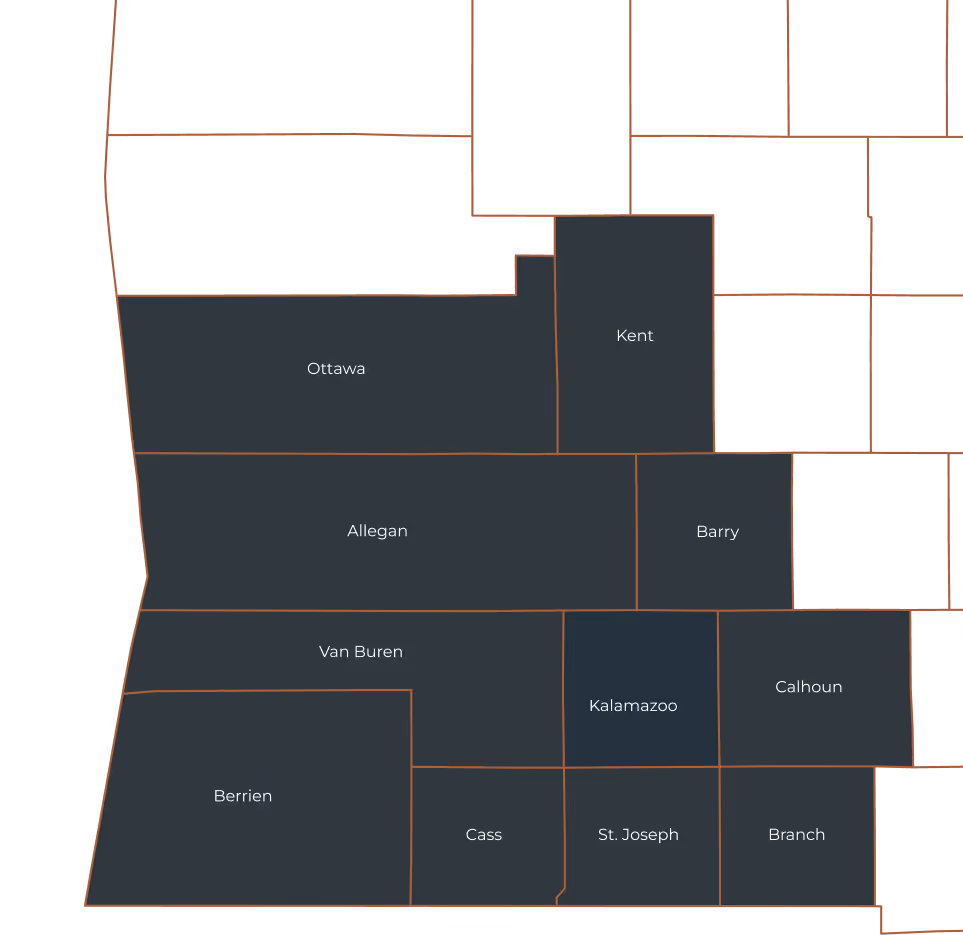
Based in Kalamazoo, our criminal defense team serves clients throughout Southwest Michigan:
Primary Counties:
- Kalamazoo County
- Van Buren County
- Allegan County
- Barry County
- Calhoun County
- St. Joseph County
- Branch County
- Cass County
- Berrien County
- and surrounding communities
Michigan Statewide Services:
- Driver's License Restoration (throughout Michigan)
- Professional Licensing Defense (throughout Michigan)

The Stakes Don't Get Higher Than This
Federal criminal charges carry consequences that can impact every aspect of your life. The decisions made in the early stages, before indictment, arraignment, and plea negotiations begin, often determine where a case ends up.
Don't face the federal system without a proven defense attorney who’s been there before. Contact Markou | Montague | Levine Defense for a free, confidential consultation.
Frequently Asked Questions About Federal Charges
Don’t answer any questions without an attorney present. Federal agents conduct voluntary interviews specifically because people feel obligated to cooperate, and any statements you make in such conversations can become evidence. Tell the agents you want to speak with an attorney, then call us.
Receiving a target letter from the U.S. Attorney's Office means that federal prosecutors have identified you as a subject of their investigation and are considering bringing charges. If you receive such a letter, contact an attorney immediately. The pre-indictment period is often the most consequential stage of a federal case, and it's where we can do the most good.
Federal sentences are calculated according to the United States Sentencing Guidelines, which provide a recommended range based on the offense level and the defendant's criminal history.
Judges consult these guidelines, and mandatory minimums set a floor they can’t go below. However, acceptance of responsibility, cooperation, and individual circumstances can all affect the final sentence.
If a defendant provides substantial assistance to the government in its investigation or the prosecution of others, prosecutors can file a motion asking the judge for a sentence below the mandatory minimum or guidelines range.
The decision to cooperate is multi-factorial. We advise clients on what it involves, what results it may produce, and what risks it carries.
From indictment to resolution, most federal cases take 12–24 months, though complex multi-defendant cases can take considerably longer. Pre-indictment representation often extends the overall timeline but tends to offer better outcomes.