
Recent Victories
Drug Possession Laws in Michigan
Drug possession charges in Michigan carry serious consequences that extend far beyond potential jail time. Even a simple possession conviction can affect your employment, housing opportunities, professional licensing, and driver's license. The specific penalties depend on the type and amount of substance involved, your criminal history, and where the offense occurred.
What Makes Southwest Michigan Different
Southwest Michigan's position along major trafficking corridors means law enforcement agencies are aggressive in pursuing drug cases. The proximity to Interstate 94 and to routes connecting Chicago to Detroit heightens police presence and multi-jurisdictional task forces. This means:
- Multiple agencies often work together on cases.
- Federal involvement is common even in smaller cases.
- Enhanced penalties apply near schools and drug-free zones.
- Conviction consequences are severe and long-lasting.
State vs. Federal Drug Charges
State charges are prosecuted by local county prosecutors and handled in circuit or district courts. These typically involve smaller quantities and local possession cases.
Federal charges are prosecuted by the U.S. Attorney's Office and carry mandatory minimum sentences. Federal cases often involve:
- Possession with intent to distribute larger quantities
- Cases involving firearms
- Multi-defendant conspiracy charges
- Repeat offenders with enhanced penalties
Types of Drug Possession Cases We Handle
Simple Possession
Personal use quantities of controlled substances. Even small amounts can result in jail time, fines, and a permanent criminal record.
Possession with Intent to Distribute
Larger quantities or evidence suggesting sales activity, such as scales, packaging materials, or large amounts of cash.
Prescription Drug Violations
Possession of valid medications without a prescription or possession of more than the prescribed amounts.
Synthetic Drug Possession
Bath salts, spice, and other synthetic substances often carry enhanced penalties due to their dangerous nature.
Paraphernalia Charges
Possession of items used to consume, manufacture, or distribute controlled substances.
Michigan Drug Possession Penalties
Michigan classifies controlled substances into schedules, with punishments varying based on the type and amount of drug involved.
- Personal use: Up to 1 year jail, $2,000 fine, 6-month license suspension
- Intent to deliver: Up to 20 years in prison, $25,000 fine
- Less than 25 grams: Up to 4 years in prison, $25,000 fine
- 25-49 grams: Up to 20 years in prison, $30,000 fine
- 50-449 grams: Up to 20 years in prison, $250,000 fine
- 450-999 grams: 15 to 30 years in prison, $500,000 fine
- 5 kilos or less or fewer than 20 plants: Up to 4 years in prison
- 5-44 kilos: Up to 7 years in prison
- 45 kilos or more: Up to 15 years in prison
- Without prescription: Up to 2 years in prison, $2,000 fine
- Intent to deliver: Up to 7 years in prison, $10,000 fine
- Prior drug convictions
- Possession near schools or parks
- Possession of weapons during drug crimes
- Large quantities suggesting distribution
- Involvement of minors
Defense Strategies That Work
Every drug possession case is unique, but successful defenses often focus on these key areas:
Fourth Amendment Violations
Law enforcement must follow strict constitutional rules when investigating drug crimes. Common violations include:
- Illegal vehicle searches during traffic stops
- Searches without proper warrants
- Exceeding the scope of authorized searches
- Failure to establish probable cause
- Miranda rights violations during questioning
Challenging the Evidence
Drug cases depend heavily on physical evidence, which can be attacked through:
- Chain of custody problems with evidence handling
- Improper testing procedures or contaminated samples
- Lack of knowledge about the presence of drugs
- Constructive possession challenges
- Entrapment by law enforcement officers
Suppression Motions
When police violate your constitutional rights, the evidence they gather can be suppressed (excluded from trial). Without key evidence, prosecutors often cannot prove their case beyond a reasonable doubt.
Medical Necessity Defenses
For prescription drug cases, we can present evidence of legitimate medical need or lawful possession at the time of arrest.
Michigan Drug Possession Penalties
Michigan classifies controlled substances into schedules, with punishments varying based on the type and amount of drug involved.
Immediate Action Phase
- Police investigation and arrest
- Miranda rights and questioning
- Evidence collection and testing
- Bond hearing and release
Investigation and Discovery
- Review of police reports and evidence
- Analysis of search and seizure procedures
- Witness interviews and investigation
- Expert consultation when needed
Pre-Trial Motions and Negotiations
- Suppression motions to exclude evidence
- Plea bargain discussions with prosecutors
- Case dismissal opportunities
- Alternative sentencing exploration
Trial Preparation and Representation
- Jury selection strategy
- Expert witness preparation
- Cross-examination of prosecution witnesses
- Compelling defense presentation
Protecting Your Rights During Drug Investigations
Your Rights During Police Encounters
You have fundamental rights when encountering law enforcement:
- Right to remain silent - use it
- Right to refuse consent to searches
- Right to an attorney before answering questions
- Right to know if you're free to leave
Search Warrant Requirements
Police need probable cause and a valid warrant to search your home. They must:
- Show specific evidence of criminal activity
- Describe the place to be searched
- List items they expect to find
- Execute the warrant within the specified time limits
Miranda Rights and Interrogations
If arrested, the police must inform you of your rights before questioning you. Anything you say can be used against you, so remain silent until you have an attorney present.
Alternative Options for First-Time Offenders
Kalamazoo County offers drug court programs that focus on treatment rather than punishment. Successful completion can result in charges being dismissed and a criminal record being avoided.
First-time offenders may qualify for diversion programs that allow charges to be dismissed upon completion of community service, counseling, or education programs.
Experienced negotiation can result in reduced charges, minimized penalties, or alternative sentencing that avoids jail time and preserves your record.
Young adults may qualify for special sentencing that keeps convictions off their permanent record upon successful completion of probation.

Meet Our Drug Possession Defense Team
The efforts of our three attorneys are backed up by a full support team. When you choose Markou | Montague | Levine Defense, you’ll have access to a group of talented legal professionals who all know your case and are working toward the same outcome.

Anastase Markou
30+ Years of Criminal Defense
Sarissa K. Montague
18+ Years of Criminal Defense
Randall S. Levine
45+ Years of Criminal Defense




Our journey began in 1987, and since then, we have evolved to protect our clients' future, securing the best possible outcomes. We prioritize: custom strategies for every case, clear communication, and personalized attention.
Areas We Serve
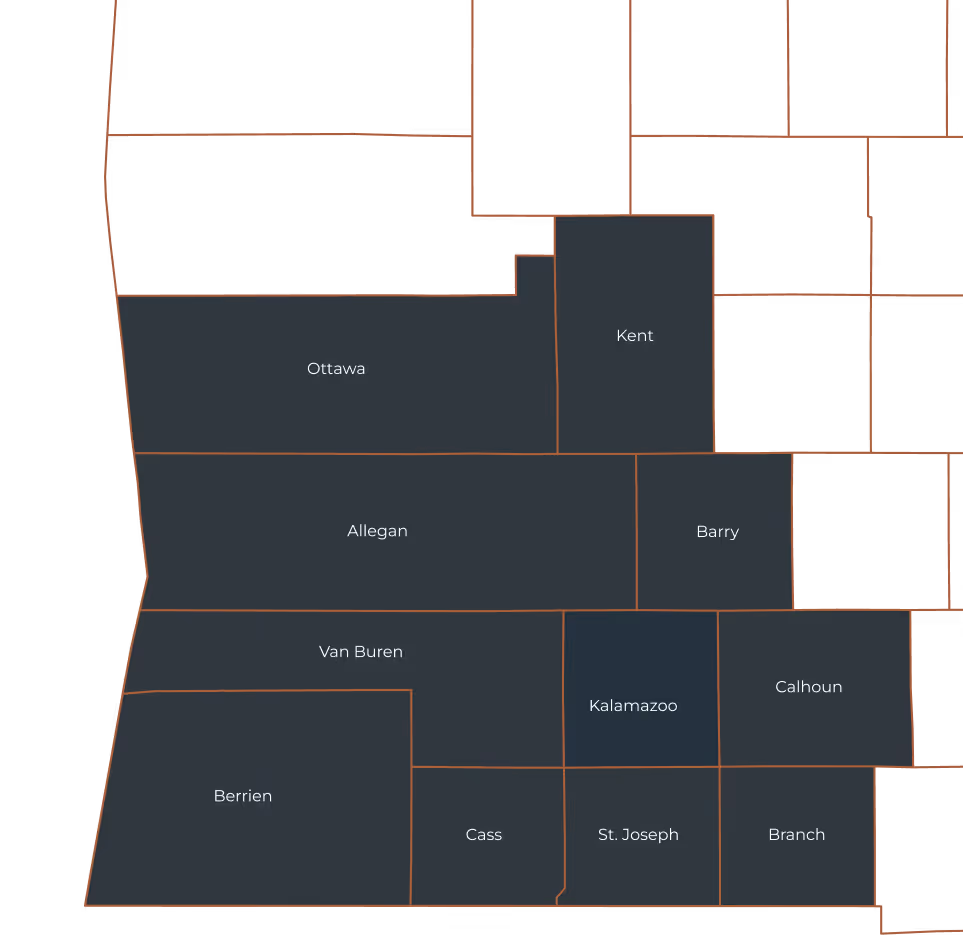
Based in Kalamazoo, our criminal defense team serves clients throughout Southwest Michigan:
Primary Counties:
- Kalamazoo County
- Van Buren County
- Allegan County
- Barry County
- Calhoun County
- St. Joseph County
- Branch County
- Cass County
- Berrien County
- and surrounding communities
Michigan Statewide Services:
- Driver's License Restoration (throughout Michigan)
- Professional Licensing Defense (throughout Michigan)

Protect Your Rights and Your Future
Schedule Your Free Consultation Today
When facing drug possession charges, every moment counts. Don't wait to get experienced legal representation. Our team is ready to listen to your story, explain your options, and start building your defense immediately.
Frequently Asked Questions About Drug Possession
Stay calm and exercise your right to remain silent. Request an attorney immediately and avoid discussing your case with police, other inmates, or anyone except your lawyer. Don't consent to searches and remember that anything you say can be used against you.
Yes, charges can be dismissed through various means, including suppression of illegally obtained evidence, successful completion of diversion programs, or when prosecutors cannot prove their case beyond a reasonable doubt.
Not necessarily. Professional licensing consequences depend on your specific profession, the nature of the charges, and how the case is resolved. We work to minimize both criminal penalties and the impact on professional licensing.
Legal fees vary based on case complexity, court level, and time required. We offer free consultations to discuss your case and explain our fee structure. Many clients find that investing in experienced representation saves money in the long run by avoiding the consequences of a conviction.
Possession involves having drugs for personal use, while intent to distribute involves evidence suggesting sales activity. The distinction depends on the quantity, the presence of scales or packaging materials, the cash amount, and other circumstantial evidence.
Not necessarily. First-time offenders may qualify for probation, diversion programs, or drug court. With experienced representation, many clients avoid jail time even when convicted.
Police need probable cause or your consent to search your vehicle. They cannot search based solely on minor traffic violations. Never consent to a search! Force the police to obtain a warrant first.
Case timelines vary from 2 to 4 months for simple misdemeanors to 6 to 12 months for complex felony cases. Factors include court schedules, plea negotiations, motion practice, and whether the case goes to trial.